









Why Strong Managers Are Harder to Find in the AI Era?
3 Min Read
What a Premier League CMO told me revealed what many leaders still do not understand about building winning teams in the AI era
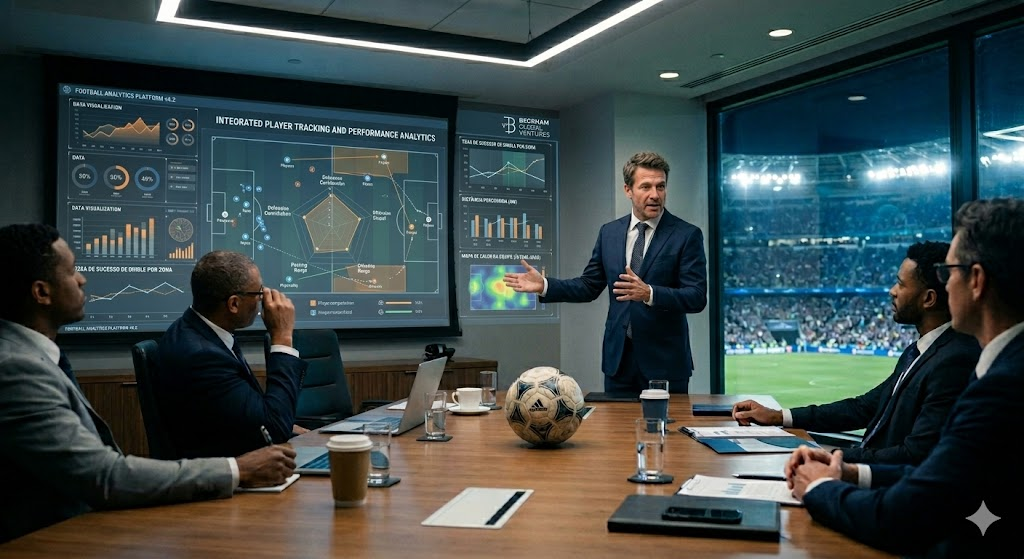
A few days ago, in a conversation with the CMO of a Premier League club, one point stood out immediately.
One of his real challenges today is finding strong senior and mid-level managers who truly understand AI.
Not people who know the buzzwords.
Not people who have tried ChatGPT once or twice.
People who can actually work with AI in a serious way.
That raises a much bigger question for sport:
What does it actually mean, today, to understand AI?
Because the issue is no longer access.
The tools are already here.
The issue is no longer awareness.
Most leadership teams have heard enough about AI by now.
The real issue is capability.
Who can actually use AI to think better, move faster, solve harder problems, and produce higher-quality work?
Who can turn it into leverage?
That is why one idea from Jensen Huang, President and CEO of NVIDIA, stayed with me:
If a senior leader is using only 10% to 20% of the AI capacity available to them, that should alarm the organization, because elite roles now require elite leverage.
That is the shift many sports organizations have not fully absorbed yet.
The real AI divide in sport will not be between organizations that use AI and those that do not.
It will be between those who treat AI as a tool, and those who build it into the operating model of leadership itself.
And that divide is already showing up in three places.
First, hiring.
More and more sports organizations say they want managers who “understand AI.”
Very few can clearly define what that means.
Today, one person uses AI regularly and comfortably for everyday work, summaries, drafting, brainstorming, quick research, and day-to-day support. That already matters. But it is still a basic level of capability, because the value remains mostly personal and tactical.
Another uses AI to accelerate research, sharpen strategy, structure thinking, and solve complex business problems.
A third goes further. They build a real layer of AI support around them, almost like a mini agency inside their role. They know how to direct tasks, refine outputs, judge quality, and turn AI into a working capability rather than a personal tool.
These are not the same people.
Yet many organizations still assess them as if they are.
Using AI regularly is no longer the differentiator.
The differentiator is whether a leader can turn that usage into real leverage for the organization.
That is not a small hiring issue.
It is a talent-definition issue.
Second, performance.
Many sports organizations already have smart, experienced, highly capable people.
But too many of them are still working in a linear way.
Too much manual prep.
Too much starting from scratch.
Too much time spent searching, summarizing, rewriting, drafting, and moving task by task.
That is exactly what this new standard exposes.
AI is no longer a nice extra.
It is becoming expected infrastructure for high performance.
The old constraints, too hard, too slow, too many people needed, are starting to weaken.
The new constraint is clarity.
Can you define the problem well?
Can you describe what a strong outcome looks like?
Can you guide iteration?
Can you combine judgment, creativity, and business context with machine speed?
That is where performance is moving.
Third, leadership itself.
Many senior executives know something fundamental is changing.
They feel the pressure.
They see the pace.
They hear the noise.
But many still do not have a clear model for what strong management now looks like.
That, to me, is the heart of the issue.
The next generation of sports leaders will not only lead people.
They will lead people and agents.
They will know how to build a layer of intelligence around them that helps them think faster, prepare better, test more options, and execute at a much higher level.
A CMO can use AI agents to accelerate audience insight, campaign ideation, sponsor integration concepts, and strategic prep.
A commercial leader can use them for prospect research, tailored outreach angles, meeting prep, and proposal development.
An innovation leader can use them to compare vendors, map use cases, scout startups, and structure pilots.
This is why the AI conversation in sport is still too shallow.
It stays focused on tools.
Which platform are you using?
Which model is best?
Who on the team has tried it?
Those are no longer the most important questions.
Final thoughts

The bigger questions are these:
How do you redefine talent?
How do you redefine high performance?
How do you redefine what a manager actually manages?
Because soon, being “AI-aware” will mean very little.
The real differentiator will be whether a leader can turn AI into real speed, real quality, real output, and real advantage.
That has immediate consequences.
Hiring criteria need to change.
Leadership expectations need to change.
What organizations reward needs to change.
If a senior leader in sport is still operating almost entirely without AI leverage, that is no longer a neutral choice.
It is a sign the operating model may already be behind.
The real AI divide in sport will not be between organizations that use AI and those that do not.
It will be between those who treat AI as a tool, and those who build it into the operating model of leadership itself.
Soon, every serious sports executive will need two teams: the human one, and the agent one.
The leaders who understand that early will not only move faster.
They will redefine what high performance looks like in sport.
With love for sport and innovation,
AR
CEO, HYPE Sports Innovation
P.S. If this is close to something you’re dealing with internally, reply to this email. I’d be glad to have a focused 1:1 conversation and help you think through and create clarity


Comments