









The Next Scandal in Sports Won’t Be Match-Fixing. It Will Be Reality-Fixing
3 Min Read
What Happens to Sports When the Loudest Fans Aren’t Human?
Why Sports Is Entering a New Era of Narrative Risk**
Sports is entering an era in which narrative becomes a competitive resource and synthetic influence becomes an operational risk.
The rise of bots is not a curiosity from politics or social media.
It is a structural shift in how legitimacy, identity, and trust are formed in societies, and sports sits directly in the blast radius.
The next decade will produce millions of fans who are not human.
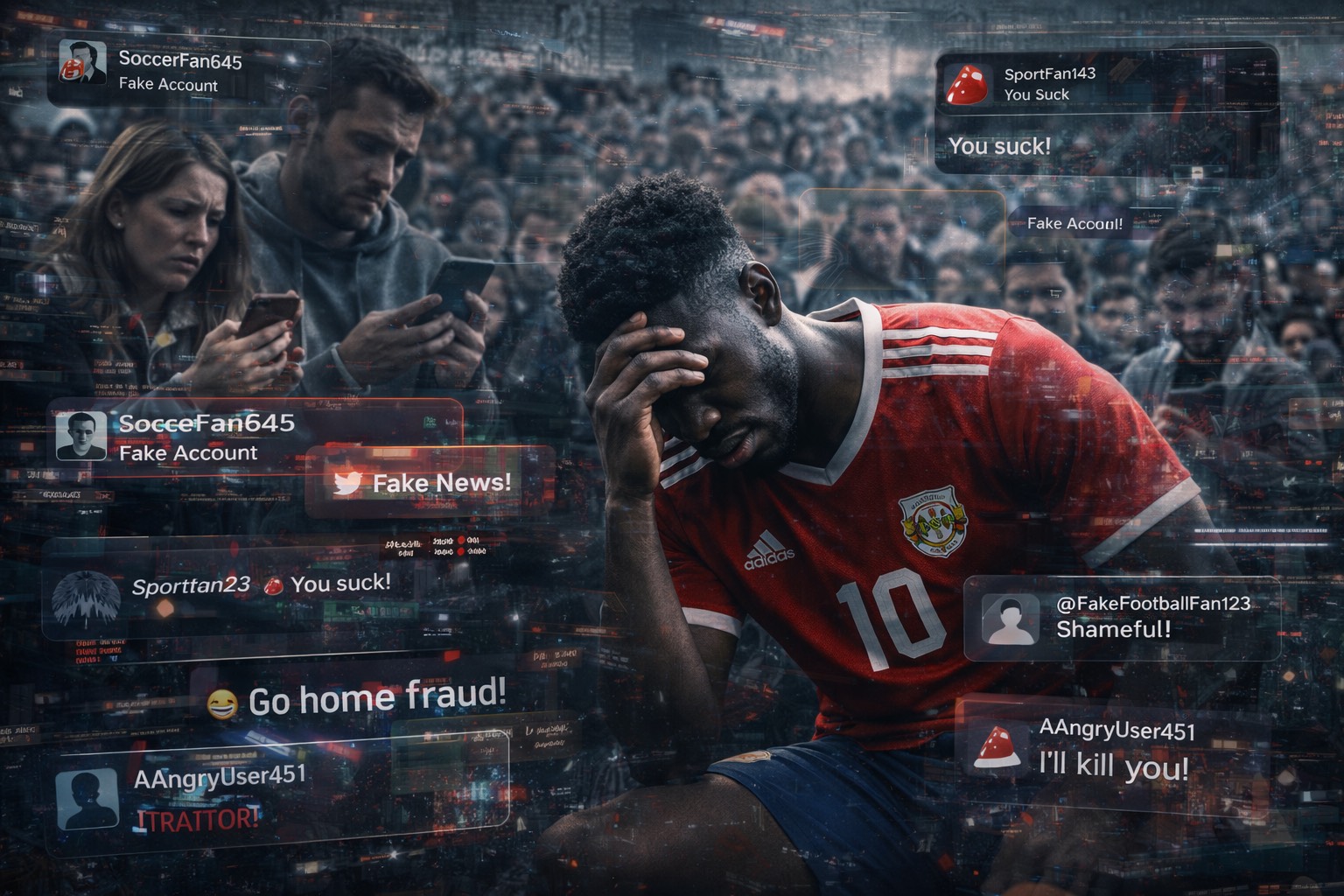
Outrage in sports will become synthetic.
Consensus will be engineered.
Narratives will be manipulated.
Identity will be amplified by artificial tribes that do not fatigue, do not forget, and do not pay a social price for aggression.
And the most valuable asset in sports, authentic fandom, risks dilution by synthetic publics.
This is not speculation.
It is already happening.

From Politics to Sports: Influence Migrates to Emotion
The Hidden Influence War Coming to Sports
Influence always migrates to the most emotional, tribal, and economically meaningful arenas.
Politics was the first testbed.
Consumer markets were the second.
Sports is the third, and the most vulnerable.
In 2024, Imperva reported that 51 percent of global web traffic was automated, and 37 percent was classified as “bad bots,” designed to manipulate, scrape, hijack, or distort digital environments.
A year later, Cloudflare blocked more than 416 billion automated bot requests attempting to capture content and train systems for influence operations. These are not the cheap bot farms of a decade ago. These are coordinated synthetic agents with persuasion capabilities.
Academia confirmed the shift. A 2025 Carnegie Mellon study analyzing nearly 200 million users across political events found that ~20 percent were bots during normal conditions, rising above 40 percent in periods of high conflict. Researchers concluded that above a ~20 percent threshold, synthetic agents distort perceived consensus.
The strategic lesson: online consensus is no longer purely human.
If outrage can be manufactured and legitimacy gamed in politics and business, it can be gamed in sports, where identity is tribal and participation is emotional.
Why Sports Is the Perfect Battlefield
Sports combines five elements that make it a prime environment for influence operations:
- tribal identity
- nationalism
- commerce
- media
- live events
Unlike entertainment, sports is not merely spectacle.
It is belonging, pride, geopolitics, and prestige.
And unlike politics, sports is not ideological.
It is emotional, which is easier to manipulate and harder to defend.
The Qatar Prototype: Soft Power Bot Diplomacy
Qatar 2022 was the first major sports event to experience synthetic influence at geopolitical scale.
As criticism mounted around
- migrant worker deaths (estimated 6,500+),
- LGBT rights,
- transparency,
- and corruption,
the digital environment shifted.
Cyabra found that:
- #qwc2022 grew 972%
- #FifaWorldCup grew 5,925%
- 19% of accounts were non-authentic
- those accounts generated 43% of conversation volume
- 29% of the synthetic accounts originated in Bangladesh
This was not misinformation.
It was reputation management through synthetic publics.
Qatar does not need votes.
It needs legitimacy.
Legitimacy in sports is geopolitical capital.
The World Cup became the prototype for Soft Power Bot Diplomacy.
Paris 2024: Narrative Warfare Becomes Operational
The Olympics provided the next test.
Russian influence group Storm-1679 deployed a multi-layer disinformation campaign titled “Olympics Has Fallen,” using convincing synthetic media and Hollywood-style packaging.
The target was not the event itself.
It was trust in the institution.
Sports is a global trust asset.
Undermining trust destabilizes sponsorship, bidding, media narratives, and prestige.
From Bot Farms to Synthetic Fans
Bots evolved in three phases:
Phase 1: Bot Farms (2012–2022)
Cosmetic influence. Followers, likes, and volume.
Phase 2: Influence Bots (2022–2024)
Political leverage and culture wars. Outrage becomes programmable.
Phase 3: Synthetic Bots (2025–2030)
Narrative agents.
They argue, persuade, translate, recruit, and simulate belonging.
Synthetic publics are not engagement.
They are identity simulations.
When identity becomes synthetic, fandom becomes programmable.
The Braves Case: Small Crime, Big Signal
In 2025, InvestigateTV exposed how synthetic fan pages impersonated players to manipulate real fans into transferring money.
If bots can impersonate players for micro-fraud, they can impersonate fans for macro-leverage.
Once bots become participants in fandom, the core architecture of belonging becomes vulnerable to simulation.
The Disappearance of Authentic Fandom
The most valuable currency in sports has never been highlights, tickets, or broadcast rights.
It is authentic fandom.
Authenticity drives:
- loyalty,
- memory,
- consumption,
- belief,
- participation,
- and identity.
Bots do not need to replace fans.
They only need to pollute the signal.
Executives rely on:
- engagement data,
- sentiment analysis,
- social listening,
- sponsorship modeling,
- and media heat mapping.
All five break in synthetic environments.
If hype can be manufactured, outrage weaponized, and belonging simulated, the industry loses its ability to price value.
You cannot negotiate sponsorship if you cannot measure demand.
You cannot sell identity if you cannot authenticate it.
You cannot defend a brand when narrative sovereignty is lost.
3 Scenarios for Sports
Three strategic scenarios define the coming decade:
Scenario A: Manipulation
Influence around transfers, ownership disputes, geopolitics, negotiations, refereeing, and cultural controversies.
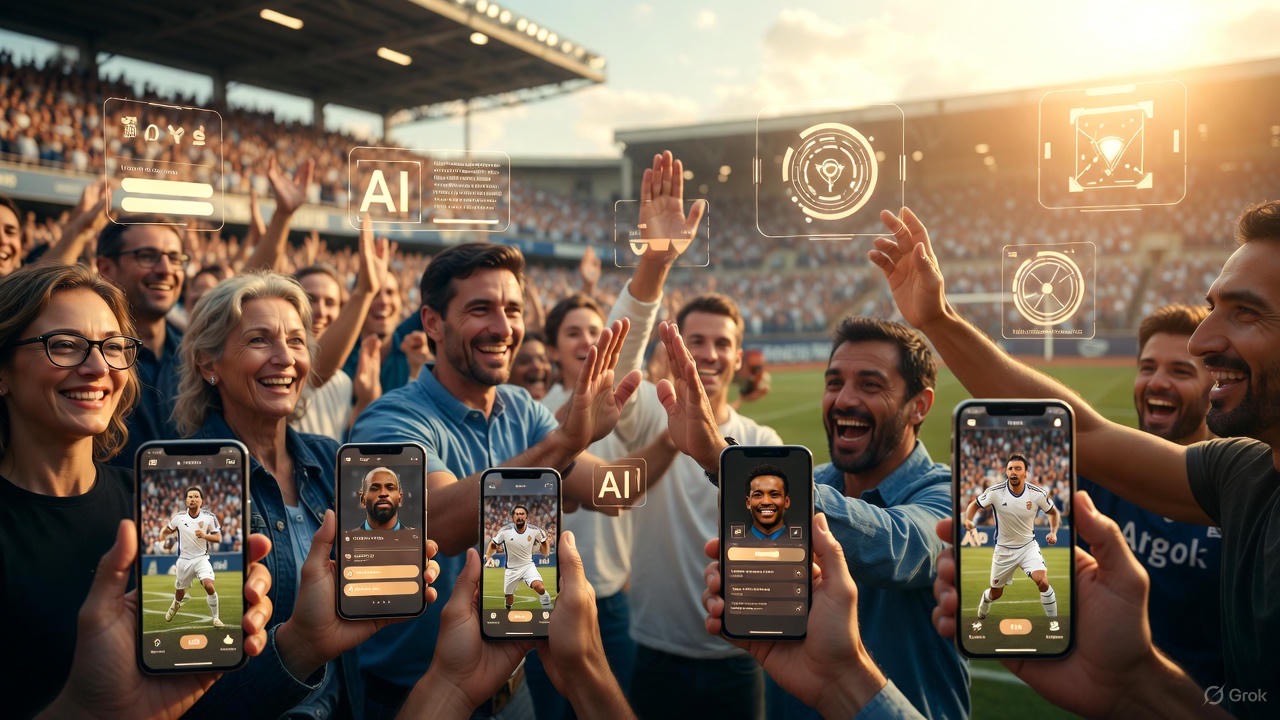
Scenario B: Synthetic Fans
Programmable hype, loyalty, boycotts, and fan movements.
Synthetic fandom challenges the definition of participation.
Scenario D: Narrative Control
The ultimate scenario.
If narrative becomes a weapon, sports institutions must defend legitimacy.
Narrative determines prestige, value, memory, and history.
What Is at Stake
The stakes are not technological.
They are existential.
At risk:
- Trust
- Authenticity
- Belonging
- Legitimacy
- Market Signal
- Sponsorship Confidence
- Institutional Authority
The next scandal in sports will not be match-fixing.
It will be reality-fixing.
Five Tools for Sports Leaders
Executives cannot wait for regulation or consensus.
1. Synthetic Influence Auditing
Detect amplification across sentiment, negotiations, controversies, and geopolitical friction.
2. Authenticity Monitoring
Differentiate belonging from engagement.
Belonging drives economics.
Engagement can be faked.
3. Narrative Risk Management
Integrate disinformation, polarization, and narrative volatility into governance and crisis response.
4. Event Security Beyond Physical
Mega-events require narrative security as much as physical security.
5. Trust Engineering
Trust becomes a premium asset.
Organizations that preserve authentic fandom outperform those optimizing synthetic engagement.
Final thoughts:

Sports survived television, globalization, fantasy, and social media.
Synthetic fandom is different.
Television expanded audiences.
Social media expanded conversations.
Synthetic bots expand illusion.
The question for the industry is no longer:
“How do we use technology in sports?”
The question is: If synthetic influence shapes the narratives around your sport and your fans,
what kind of decisions will you start looking at tomorrow morning?
With the Love for Sports and Innovation,
AR
CEO, HYPE Sports Innovation



Comments
John Gontier
Good reading but no alarm!! lol