









The hardest part of advertising is no longer making the ad
3 Min Read
The hardest part of advertising is no longer making the ad
Generative AI turned creative production into a commodity. The advantage now belongs to teams who can tell which creative will work before the budget is spent.
A few years ago, the bottleneck in any campaign was making enough good creative. Briefs took weeks. Production cost real money. Shipping ten strong variations felt like a win.
That constraint is gone. A small team can now generate dozens of polished concepts in an afternoon, in every format and aspect ratio a platform asks for. Volume is no longer the problem. If anything, there is too much of it.
So the hard question has moved. It is no longer “can we make more creative.” It is “which of these will actually perform, and how do we know before we put money behind it.”
The old way of answering that is slow and expensive
For most teams, the answer still comes from a mix of gut feel, a few rounds of testing, and a post-campaign report that explains what happened after the spend is already gone. That loop made sense when you were choosing between three options. It breaks down when you are choosing between fifty.
It is also reactive by design. You learn what worked once the budget is committed and the flight is over. And creative does not stay fresh while you wait. The same ad that lands on day one can shed a meaningful share of its click-through rate within a week or two, as audiences see it again and again. By the time the data confirms fatigue, you have already paid for the decline.
A different starting point: predict, then spend
This is where a new category is taking shape. Instead of testing creative after launch, marketing teams are starting to evaluate it beforehand, using AI and data science to predict how an asset is likely to perform and to explain why.
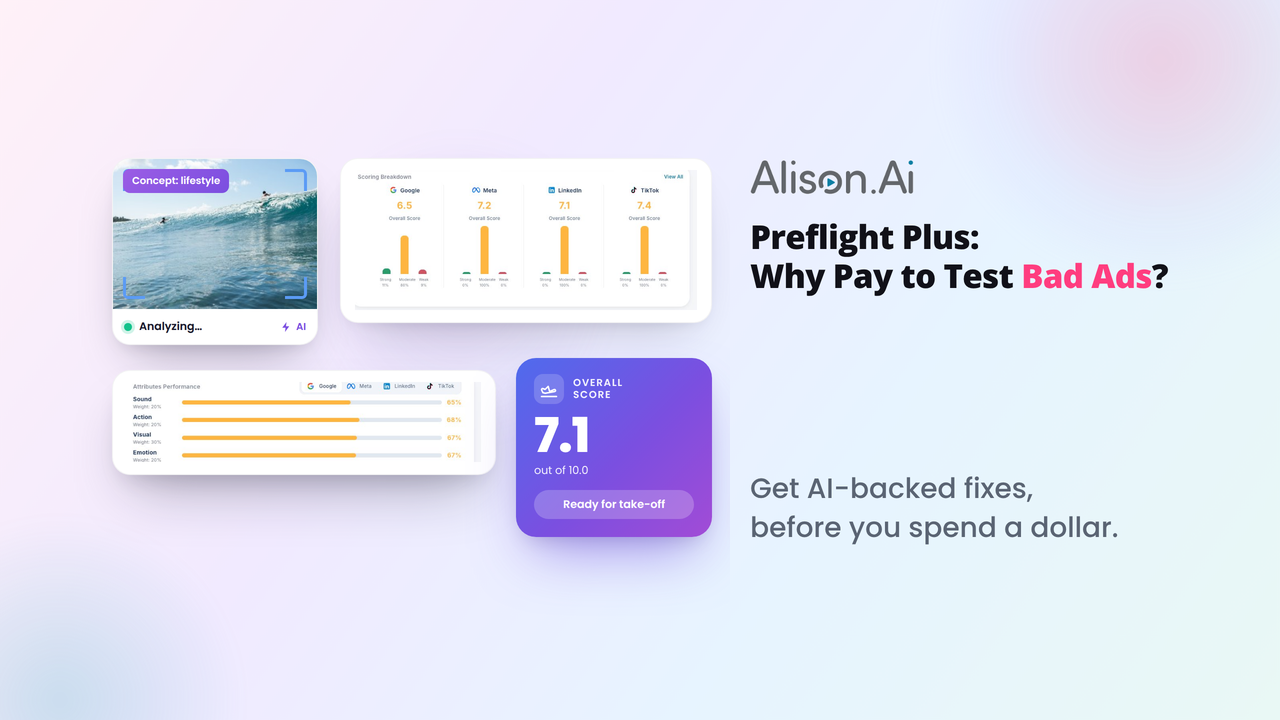
Alison.ai is one of the companies building in this space. Its proprietary Creative Genome analyzes creative the way a performance analyst would: scoring assets, surfacing the elements most likely to drive engagement, and benchmarking work against competitors and industry norms. Rather than relying only on A/B testing once a campaign is live, teams can shape stronger creative earlier, cut waste, and walk into launch with a view of what is likely to work.
The shift is subtle but important. The advantage moves from the ability to create to the intelligence that guides creation.
Why this bites hardest in sports
Few categories feel the pressure as sharply as sports. Clubs, leagues, broadcasters, sponsors and brands all compete for the same fans, in the same feeds, around a relentless calendar of fixtures, signings and activations. The cadence is unforgiving and the audience is fickle. That is exactly the environment where guessing wrong is most expensive, and where knowing which creative will resonate before it goes live becomes a genuine edge.
The evidence is adding up
Alison.ai’s Creative Genome has analyzed more than 3.5M creatives, 350M creative features and over 11.5B creative tags, and the company reports that customers using the platform have seen an average 3x increase in ROAS. The underlying idea is simple: replace intuition with evidence, and make creative decisions you can actually defend.
That is the real story behind the current wave of AI in marketing. The future of advertising is not just AI-generated content. It is AI-guided creativity, where the smartest thing a team produces is not the next ad, but the judgment about which one to back.
Learn more at https://alison.ai
P.S.
The biggest risk in sports right now isn’t choosing the wrong solution. It’s missing the one your competitors discover first.
See the technologies selected by leading sports organizations, meet the people behind them, and learn how clubs, leagues, federations, broadcasters, and brands are already putting them to work.
Want to know more about it? Click HERE!


Comments