










Ten Mistakes That Kill Deals in 2026 and how to fix them fast
3 Min Read
The Real Reason Sports Startups Don’t Get Deals, It’s Not the Product, It’s Everything Else
2026 is a different year.
For the past two years, everyone talked about AGI, models, accuracy, and “AI-powered everything.”
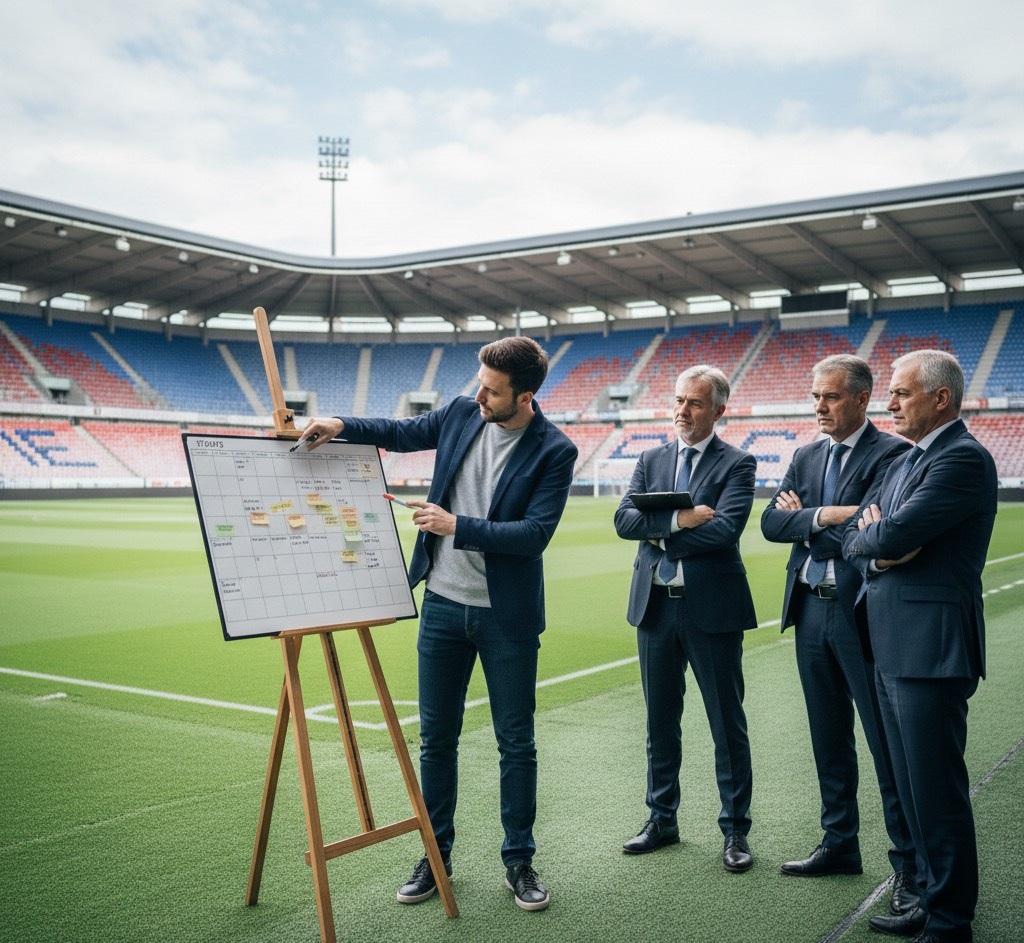
Today, none of that matters unless it drives ROI inside a brand’s budget, timeline, and priorities.
I’m writing this after a decade working closely with hundreds of sports startups, leagues, federations, broadcasters, clubs, and investors.
I’ve seen deals close and I’ve seen deals quietly die.
Here’s what matters this year.
Ten mistakes that kill deals with sports brands (2026)
1. Talking product instead of problem and result
Brands don’t buy AI. They buy improvements they can measure in the season ahead.
Pain: When you open with tech, they nod, say “interesting”, and never call back.
Impact: If you can’t answer “what improves in 90 days”, you lose the room.
2. Value proposition is unclear
If you solve too many things for too many users, brands don’t know what they’re buying.
Pain: Confusion kills confidence.
Impact: Brands want clarity and conviction, not variety.
3. No clear offer
Most startups never say what exactly they are offering.
No timeline, no owner, no deliverables, no definition of success, no commitment.
Pain: If they don’t understand what they’re buying, they don’t buy.
Impact: Deals don’t die from rejection, they die from lack of clarity.
4. ROI in the wrong language
Accuracy, intelligence, or autonomy don’t move budgets without mapping to brand metrics.
Marketing buys engagement. Commercial buys revenue. Medical buys availability. Operations
buy efficiency.
Pain: Wrong language, wrong buyer, wrong outcome.
Impact: If ROI doesn’t speak to their KPIs, it doesn’t exist.
5. Proof is not relevant enough
Not all proof is equal.
A Premier League case won’t move a broadcaster. A youth academy case won’t move a
federation.
Pain: Impressive doesn’t mean relevant.
Impact: Relevance beats sophistication every time.
6. Risk not addressed
Brands worry about disruption, politics, failure, and reputation.
Pain: Without risk reduction, the safest internal answer is always “not now.”
Impact: Deals freeze before evaluation even begins.
7. Pilots are messy and heavy
Pilots without metrics, timelines, responsibilities, and success criteria fall apart.
Pain: Chaos kills momentum.
Impact: A pilot is not a test, it is a conversion path to contract.
8. No timing and no urgency
Sports moves by seasons, competitions, and budget cycles.
Pain: Miss the window and nothing happens for 12 months.
Impact: Timing beats brilliance.
9. Improving the product instead of the offer and deal process
More features don’t close more deals.
Pain: Founders optimize tech while brands optimize certainty.
Impact: Offers, proof, timing, and risk reduction are what convert.
10. No momentum
Deals are emotional as much as logical.
Pain: Silence makes brands nervous.
Impact: Fast follow-ups signal competence and confidence.
Founders rarely lose deals because the product is bad.
They lose because value is unclear, risk is unaddressed, and the offer is unfinished.

From AGI to ROI
2024/2025 were AI-first years.
Models, predictions, and autonomy dominated the pitch deck.
2026 is ROI-first.
Outcome beats novelty.
Priority gets funded.
The real cause: two operating systems
Brands and startups optimize for different things.
Brands optimize for certainty
Startups optimize for innovation
Brands buy outcomes
Startups sell ideas
Brands reduce risk
Startups embrace iteration
Brands move by seasons and budgets
Startups move by demos and speed
Neither side is wrong.
But deals fail when the operating systems don’t translate.
Offer > Product
A product is not an offer.
An offer is not a deck.
A deck is not a deal.
Deals close when:
- Value is explicit
- Proof is relevant
- Risk is contained
- Timing makes sense
- ROI uses the brand’s metrics
- Pilots convert to contracts
This is where the leverage sits in 2026.
How founders win
If I were advising you in January, I’d focus on:
- Designing an offer, not a demo
- Building proof that reduces fear
- Learning how brands make decisions
- Aligning with seasons and budget cycles
- Treating pilots as conversion engines
- Manufacturing momentum through cadence
- Tracking deals as revenue processes
This is the difference between pitching innovation and selling outcomes.
Two questions to start the year
If I were a brand, would I buy from me
Am I selling into the right operating system
If either answer is unclear, start there.

Final thoughts
2026 rewards founders who translate innovation into outcomes, intelligence into ROI, and
disruption into safety.
Clarity wins deals.
Safety unlocks budgets.
Momentum creates revenue.
Innovation matters.
Execution decides.
With Love for Sports and Innovation
AR
CEO, HYPE Sports Innovation
If you want to get a YES from sports brands in 2026, download the Startup Blueprint.
One short questionnaire and it’s yours.


Comments