









Sport Is About to Make an Expensive Mistake
3 Min Read
Sport Is About to Make an Expensive Mistake
AI can make sport better. That is not the question.
The real question is whether, in the race to automate, personalize, and optimize everything ahead of the 2026 World Cup, the sports industry is about to make an expensive mistake: weakening the emotional experience that gives sport its grip on people, and with it, the loyalty, memory, belonging, and commercial power that follow.
That is the risk.
Not smarter systems.
Not faster workflows.
Not better targeting.
The risk is building a version of sport that becomes more intelligent on the surface and less powerful where it matters most: in what people feel.
This article is about that line.
It is about the mistake the industry is at risk of making, how to recognize it before it becomes normal, and the standard clubs, leagues, brands, broadcasters, and startups should use to judge innovation if they want to embrace AI without weakening the human force that made sport matter in the first place.
The Feeling Sport Cannot Afford to Lose
The first football match I ever saw was in Jerusalem. I was eight years old.
My grandfather took me to watch Hapoel Jerusalem play Hapoel Haifa. The match ended 0-0. No famous stars. No drama. Nothing, on paper, that should have stayed with me for life.
And yet it did.
I remember climbing the stairs into that old stadium. I remember the moment the pitch opened in front of me. I remember the feeling that I was stepping into a world bigger than me, louder than me, more alive than anything I had known before.
And I remember this too: I brought my football boots in a plastic bag.
Because in my mind, if a player was missing, maybe they would call me in.
That is what sport does at its best.
It does not only entertain.
It pulls you inside.
It makes you feel that the moment belongs to you, and that you belong inside it.
That is not a sentimental detail around the business of sport.
That feeling is the asset.
It is what turns attention into loyalty, attendance into identity, and a live event into a memory that stays in the body for years.
If innovation weakens that, it is not improving sport in the way that matters most.
The Real Mistake
The mistake is not adopting AI.
That would be the wrong conclusion.
Sport should move aggressively on AI.
It should explore it, test it, use it, and build with it.
The real mistake is adopting AI without being clear about what it is supposed to protect and strengthen.
Too much of the industry is still overvaluing what can be:
• automated
• measured
• optimized
• personalized
• scaled
And undervaluing what actually makes people care:
• emotional depth
• belonging
• memory
• live intensity
• human connection
That is where the problem begins.
Too often, we confuse measurable engagement with meaningful connection.
We treat relevance as if it automatically creates intimacy.
It does not.
A smarter system does not automatically create a deeper experience.
And not every innovation that looks impressive in a deck deserves a place inside sport.
If we get this wrong, the loss will not happen all at once.
It will happen gradually.
Sport will become easier to consume and harder to feel.
More connected on the surface, less meaningful underneath.
More efficient, less unforgettable.
That is what makes this mistake expensive.
The Standard
If AI is going to reshape sport, it should be judged by a higher standard.
Not by how much it automates.
Not by how much it tracks.
Not by how clever it looks in a demo.
By whether it makes the human experience stronger.
That is the standard.
And it should be applied without compromise:
• Technology should serve emotion, not distract from it.
• Personalization should deepen belonging, not simulate intimacy.
• Innovation should reduce noise and increase meaning.
• AI should bring people closer to the experience, not further away from it.
• Every new technology should earn its place by making sport more human, not less.
This is the line the industry needs now.
Because human experience in sport is not a soft layer around the commercial model.
It is the commercial model.
It is the reason people care, return, travel, buy, sing, hope, remember, and bring their children with them.
It is:
• the roar before kickoff
• the silence before a penalty
• the tension in the body
• the shared glance between strangers after a goal
• the live moment that becomes a lifelong memory
If technology does not strengthen that, it is missing the point.
The Test Before 2026
The 2026 World Cup is not only a sporting event.
It is a stress test for how sport will choose to use AI on the biggest stage in the world.
By then, more clubs, leagues, broadcasters, sponsors, and startups will be using AI across every layer of the industry.
That is why the window for clear thinking is now.
Before adopting any new technology, sports leaders should be asking harder questions:
• Will this deepen emotion, or dilute it?
• Will this create belonging, or only simulate it?
• Will this make the experience more memorable, or more mechanical?
• Will fans feel closer to the sport, or simply more processed by the system?
• Will this strengthen the emotional engine behind loyalty and growth, or quietly weaken it?
Those are the questions that should decide what gets adopted, what gets funded, what gets showcased, and what gets scaled.
Not every tool deserves the same future.
Not every startup deserves the same stage.
And not every AI company understands the emotional weight of the arena it is stepping into.
A Different Standard for the World Cup Showcase
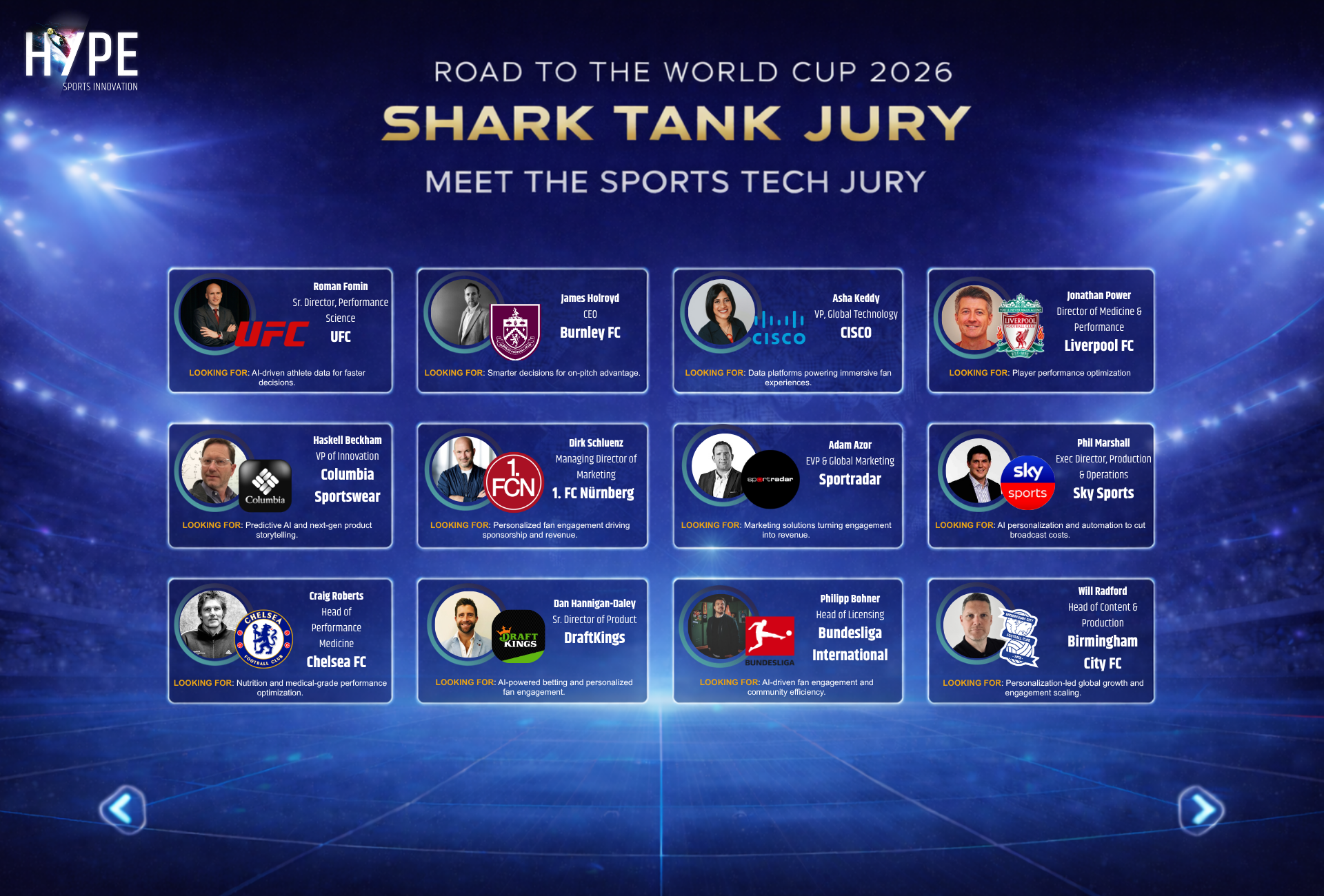
That is exactly why, on the road to the 2026 World Cup, we are building our Shark Tank this way.
Not as another startup showcase.
Not as a parade of clever tools.
But as a deliberate filter.
A deliberate conversation.
A deliberate standard.
We want to create a space that celebrates ambition, welcomes AI, and opens the door to bold new ideas, while still asking the question too many people are avoiding:
Does this actually make sport better where it matters most?
From where I sit, working closely with startups, global sports brands, and decision-makers across the industry, one thing is already clear.
There is no shortage of clever technology entering sport.
What is still far more rare is technology that truly understands the emotional stage it is stepping onto.
That is the gap we are trying to close.
Because the best innovation in sport should not distance people from the experience.
It should pull them closer to it.

Final thoughts
The future of sport will be more intelligent.
That part is already happening.
The real question is whether it will also remain deeply human.
That is the challenge in front of clubs.
In front of leagues.
In front of broadcasters.
In front of brands.
In front of startups.
And in front of anyone shaping what sport will feel like by 2026.
The child with football boots in a plastic bag, walking into a 0-0 match in Jerusalem, did not care about optimization.
He felt wonder.
If this next era of innovation cannot protect and deepen that feeling, then we are building the wrong future.
That is the standard.
That is the challenge.
That is the future worth building.
With love for sports and innovation,
AR
P.S. SportTech Solution? If you want to pitch to over 100+ sport properties, get to this link here


Comments
Mark
Exactly. Particularly in the world of AI EVERYWHERE people crave human connection, belonging.....how can our sports AI foster that??