









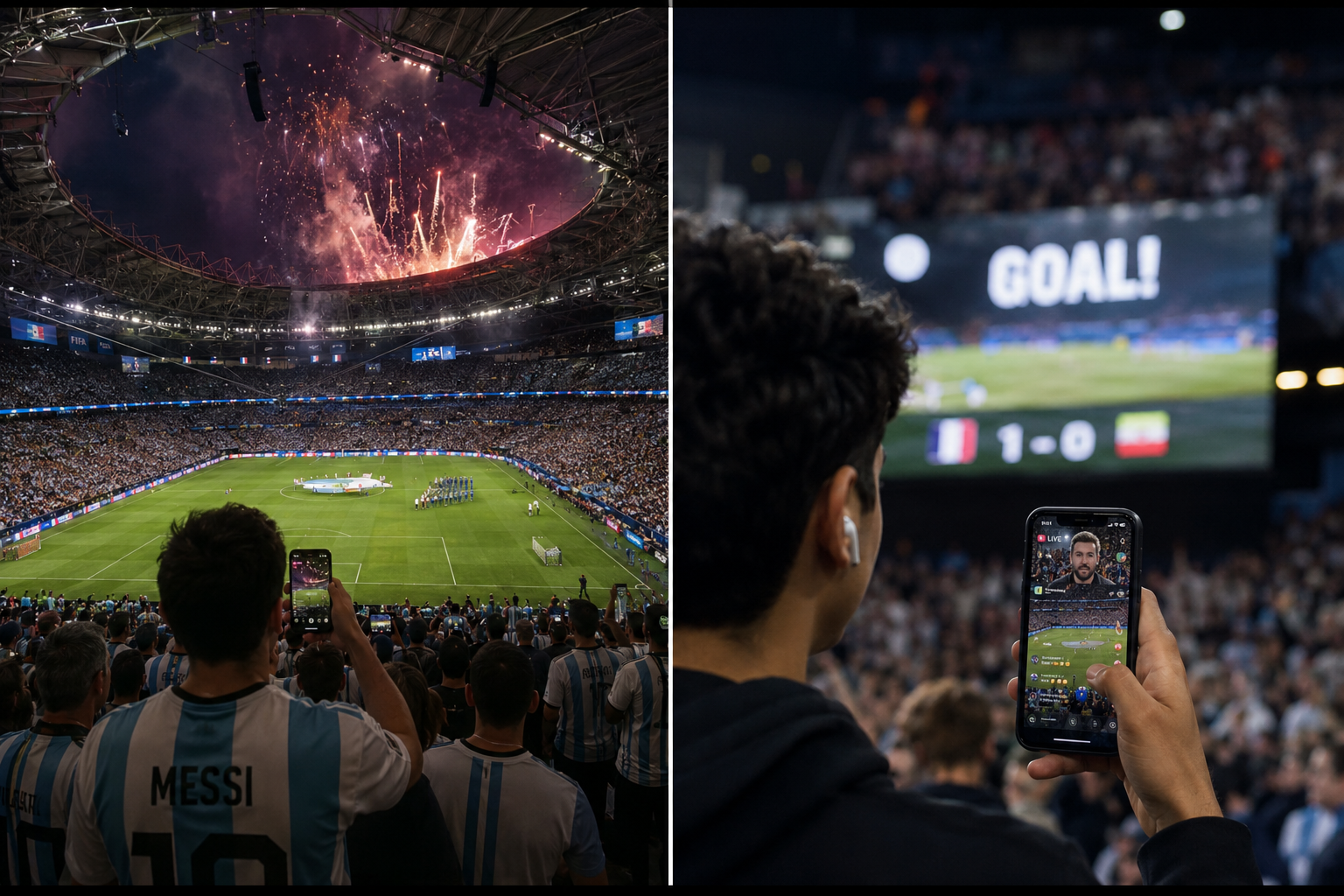
Most Companies Still Misread What Sports Are Becoming
3 Min Read
Most Companies Still Misread What Sports Are Becoming
BOOM. The 2026 World Cup Is Where the AI Attention Economy Begins
More than 5 billion people engaged with the last FIFA World Cup
Global sports media rights are racing toward $78 billion by 2030.
SportsTech is projected to nearly double within five years, from $34.25 billion in 2025 to $68.70 billion by 2030.
In 2025, 96 of the 100 most-watched telecasts in America were live sports.
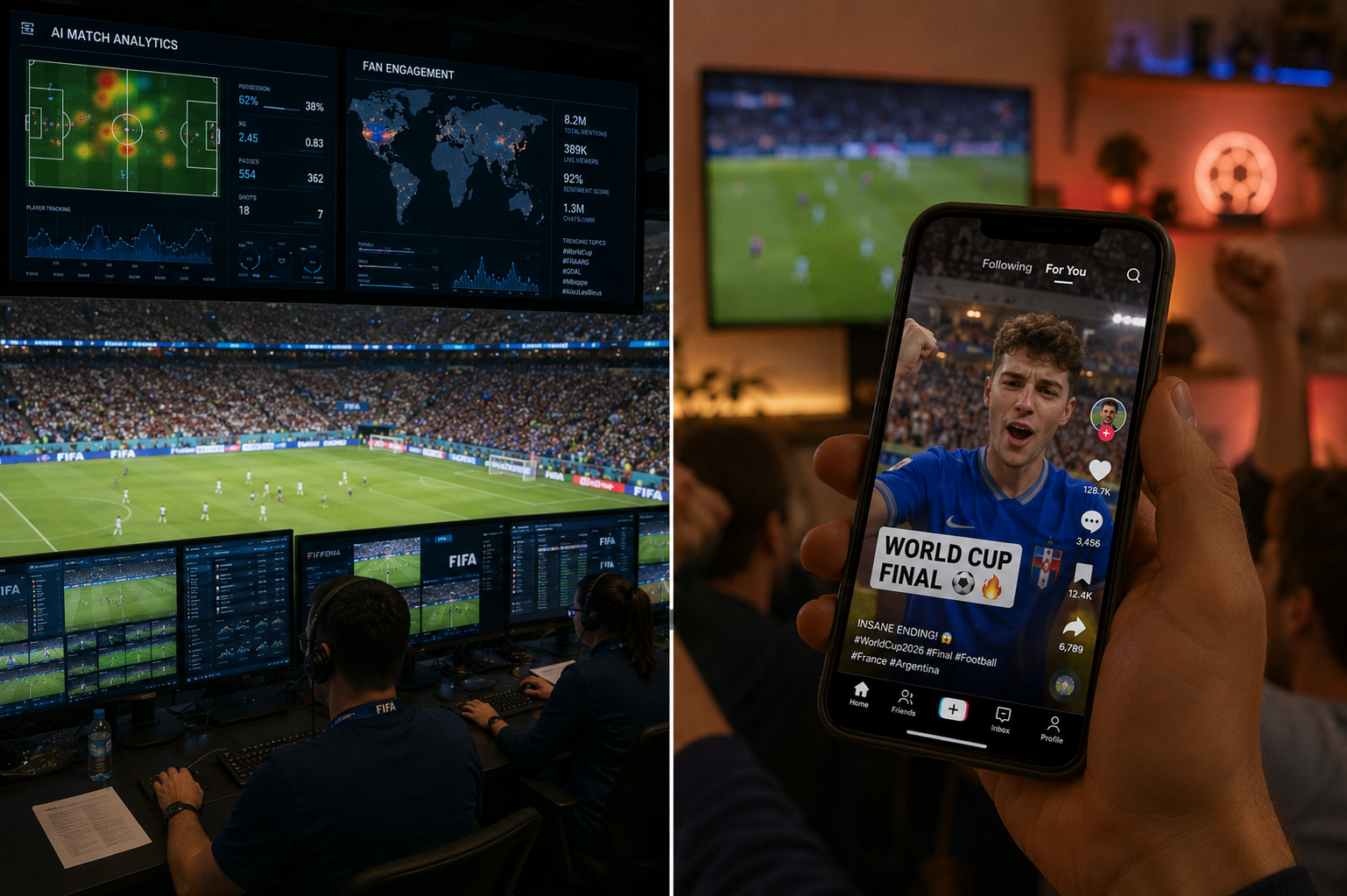
AI is reshaping Formula 1 in real time.
Streaming platforms are buying sports infrastructure.
Creator-led leagues are changing how the next generation experiences fandom.
And while most companies are focused on AI models, automation, and software, something much bigger is happening underneath the surface.
In a world flooded with infinite AI-generated content, human attention is becoming fragmented, synthetic, and harder to hold.
Except in one place.
Sports.
Live sports may become one of the last environments where billions of people still gather at the same time to feel something together.
That changes the strategic importance of sports completely.
This is no longer only about games, media rights, or sponsorships.
It is about who controls one of the last large-scale emotional attention systems left on earth.
The World Cup Will Never Be Experienced the Same Way Again
Most people think the AI era will be defined by content.
It will not.
Content is becoming infinite.
Attention is becoming scarce.
And authentic emotional moments are becoming extraordinarily valuable.
That is where sports change completely.
Sports create something AI cannot manufacture:
- tribal identity
- collective anticipation
- shared emotional release
- real-time tension
- belonging at scale
AI makes content abundant.
Sports make emotion scarce.
That may become one of the most important economic dynamics of the next decade.
The Money Is Already Moving
The smartest companies are no longer looking at sports as content.
They are looking at them as infrastructure.
DAZN’s reported $100 million acquisition of streaming technology company ViewLift was not only about media.
It was about:
- distribution
- fan relationships
- behavioral data
- personalization
- subscriptions
- commerce
- attention flows
The real battle is no longer about media rights.
It is about ownership of emotional attention at scale.
Formula 1 Already Shows the Future
Formula 1 may be the clearest preview of what global sports are becoming.
AI is already integrated into:
- race strategy
- operations
- broadcasting
- compliance
- performance optimization
Reuters reported that eight major AI partnerships were signed across Formula 1 in six months. (reuters.com)
This is no longer experimentation.
This is infrastructure deployment.
Elite sports are becoming one of the world’s most valuable live AI laboratories.
The Creator Economy Is Rewriting Sports
For decades, broadcasters controlled sports storytelling.
That era is ending.
The next generation consumes sports through:
- creators
- clips
- communities
- personalities
- short-form storytelling
The creator around sports is becoming as important as the broadcast itself.
New ecosystems like Kings League and Baller League are being built specifically for this behavior.
This is not a side trend.
It is a structural shift in how attention flows around sports.
Sports are moving from an event economy into a participation economy.
The Biggest Mistake Many Companies Will Make
Many companies outside sports still think sports are another vertical.
Many organizations inside sports still think innovation is another department.
Both assumptions are becoming dangerous.
Technology is no longer supporting the sports business.
Technology is becoming the sports business.
The winners of the next decade will behave like:
- technology ecosystems
- AI-native organizations
- community platforms
- data infrastructures
- behavioral intelligence companies
Smaller, faster, AI-native organizations may soon outperform organizations many times their size.
That already happened in media, retail, music, and advertising.
Now the same pattern is reaching sports.
This Is Bigger Than Sports
This transformation is not only about sports.
It is about:
- the future of attention
- the future of media
- the future of community
- the future of commerce
- the future of identity
- and the future relationship between AI and human emotion
Sports are where these forces are colliding first.
And by the time most industries fully realize what is happening, the infrastructure may already be built underneath them.

Final Thoughts
Most people are still watching the match.
Very few are noticing the infrastructure being built underneath it.
An infrastructure powered by AI, creators, data, community, personalization, commerce, and emotion.
That infrastructure may become one of the defining economic systems of the next decade.
The organizations that understand this early will not simply participate in the future of sports.
They will help shape the future of global attention itself.
The question is no longer whether sports matter to your future.
The question is whether you are close enough to the transformation, or still watching it from the outside.
With the Love for Sports and Innovation,
AR
CEO, HYPE Sports Innovation

Comments
Mark Moyer
Great piece, Amir. Hard to find a larger group of old-school thinkers than those inside of sports, but the winners will be those who adopt and integrate AI and more into their short and long range planning. I couldn't agree more re how people feel at a live sports event. I'm in NYC and regularly attend NHL and MLB games, and the atmosphere cannot be replaced by AI, but I'm certain it is and will be enhanced by it. Congrats on all you've accomplished (especially the 4 kids!). Cheers, Mark
John Gontier
Great stuff. Community in the new name of the game.....again