










Your Company Two Years From Now Already Exists. Are You Ready to Meet It?
3 Min Read
Your Company Two Years From Now Already Exists. Are You Ready to Meet It?
The decisions you make and avoid will determine whether your company is ready for what comes next.
Last week, I wrote about a question I had asked a friend who runs a company:
“If Elon Musk became the CEO of your company tomorrow, what would he change?”
I received many responses to that blog. More than anything else, people kept coming back to this question, perhaps because the answer is almost never “nothing.”
Those responses also brought me back to a moment in my own life, one that taught me how expensive the gap between knowing and acting can become.
Years ago, I knew I wanted to sell my company.
Three years later, I was walking through a conference when I met an old friend.
“Amir, how are things?”
“Good,” I said. “I’m thinking about selling the company.”
He looked at me, surprised.
“Thinking about it? You told me that three years ago. What have you done about it since?”
That question stopped me.
He was right.
For three years, I had known what I wanted. I had spoken about it and thought about it, but I had not turned the decision into action.
Something shifted in that moment.
Three months later, I sold the company.
But those three years had cost me time and a significant amount of money. Not because I failed to understand what needed to happen. Because I waited too long to act on what I already knew.
That experience taught me something I have never forgotten:
The most expensive decisions are often not the ones we get wrong. They are the right decisions we wait too long to make.
The gap between knowing and acting
The question is not really about Elon Musk, or whether you agree with his leadership style. He represents a leader arriving without your history, habits, internal politics or emotional attachment to the way things have always been done.
He might challenge the business model, stop activities that no longer create value, restructure the team or question assumptions that everyone else has learned to accept.
Most leadership teams can already imagine what he would change. So the real question is:
If you already know what a fearless new CEO would change, why are you waiting for one?
Most companies will not be disrupted because they failed to see the future. They will be disrupted because they saw it and responded too slowly. The gap is rarely between what a company knows and what it could know. It is between what it knows and what it is willing to change.
Your future company is already being built
Your company two years from now already exists.
It exists in the decisions you make today, the assumptions you continue to protect, the capabilities you build and the changes you postpone.
Few terms are discussed more right now than AGI: Artificial General Intelligence. OpenAI defines AGI as highly autonomous systems that outperform humans at most economically valuable work. Nobody knows exactly when it will arrive. It may be within the next year or two, or it may take longer. But the direction of travel is becoming clear.
Imagine waking up and telling your AI: “Find an unmet need, identify a product that can solve it and build a business around it.” While you continue with your day, it conducts market research, analyses competitors, finds a manufacturer, tests pricing, builds a go-to-market plan and begins executing it. It returns not with another recommendation, but with a functioning business and potentially early revenue.
That is the scale of the earthquake ahead. It will not affect only technology companies. It will challenge the value, structure and business model of every company, including yours.
What happens to your value when clients can use AI to perform work they once paid you to do? What happens when a team of five can compete with an organisation of fifty, or when a competitor outside your category offers a completely different solution?
These are not distant possibilities. They are strategic questions for today.
No leadership team can predict exactly how the next two years will unfold. That is not the job. Prediction searches for certainty. Preparation creates options and must end with a decision, an experiment or a new capability.
You do not need to predict the future perfectly. You need to build a company capable of responding to it.
The questions need to be asked in sequence: look outside, look inside, make a choice and turn it into action. See. Challenge. Choose. Move.
1. SEE: Look outside
Most leadership teams spend the majority of their time looking inward: revenue, operations, budgets and immediate problems. But the future of the company is often being shaped outside the room.
Ask:
1. What is changing faster than we expected?
2. What will customers expect in two years that they do not expect today?
3. What part of our current value could become cheap, automated or easy to copy?
Identify the three changes that could materially affect how you create value, make money or win customers.
2. CHALLENGE: Look inside
Every company carries decisions from its past: products for yesterday’s customers, processes built around old technology and assumptions that have become untouchable.
Ask:
1. What would a fearless new CEO stop doing?
2. Which assumption are we protecting despite the evidence?
3. What decision do we already know we need to make?
Then ask the most uncomfortable version:
If we were building this company today, what would we never build again?
Every meaningful move towards the future requires releasing something from the past.
3. CHOOSE: Decide what game to win
Many companies respond with disconnected initiatives: an AI pilot, a new product, a partnership. Activity increases, but direction remains unclear. A future strategy is a choice about where you will play and how you intend to win.
4. ASK:
1. What problem do we want to become uniquely valuable at solving?
2. Why should customers choose us in a world where today’s capabilities are available to everyone?
3. What capability must we start building now, before we urgently need it?
The answers must connect customer need, product, technology, business model, people and go-to-market. The deeper question is who your company needs to become.
You cannot prepare for every possible future. Leadership means choosing which future you are prepared to build.
5. MOVE: Turn the choice into action
This is where many conversations about the future fail. The discussion ends, the current quarter takes over, and nothing changes.
The future never sends an invitation to your calendar. You have to protect time for it.
Ask:
1. What can we test within the next 30 days?
2. What will we stop doing to create the capacity?
3. Who owns the first move, and what must we learn within 90 days?
Choose one important assumption and test it: speak with customers, trial an AI-enabled process or build a prototype.
Movement creates information that discussion cannot.
See the change. Challenge the past. Choose the future. Make the move.
One hour that could change your next two years
Bring your leadership team together for 60 minutes.
• 10 minutes: Each person identifies the three external changes that could have the greatest impact on the company.
• 15 minutes: Ask, “What would a fearless new CEO change first?”
• 15 minutes: Choose the one decision that matters most.
• 10 minutes: Define an action or experiment that can begin within 30 days.
• 10 minutes: Name the owner, starting date and outcome you will review within 90 days.
Do not leave with another list.
Leave with one decision.
Final thoughts
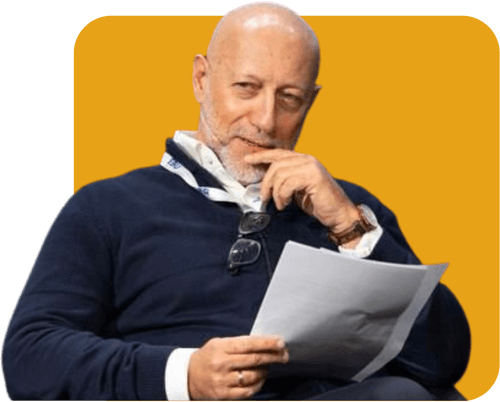
My friend did not tell me how to sell my company. He asked one honest question that exposed the distance between what I said I wanted and what I was willing to do. Three months later, the company was sold.
Here are the four ideas I would take into your next leadership meeting:
• You probably know more than you think. The decision you keep discussing may already be clear. The real question is what is preventing action.
• Do not wait for certainty. You cannot predict the next two years, but you can identify the changes that matter and prepare options.
• Every new priority needs a sacrifice. If you decide what to start but not what to stop, the future will remain another item on an overloaded agenda.
• Turn discussion into movement. Choose one decision, one owner and one action that begins within 30 days.
You do not need Elon Musk to run your company. You need the courage to ask the questions a fearless new CEO would ask.
Start with this one:
What decision do I already know I need to make to ensure this company is still relevant two years from now?
Do not wait for an old friend, a new competitor or a crisis to ask it for you.
The future of your company does not begin two years from now.
It begins with the decision you make next.
With the Love for Sports and Innovation,
AR
CEO, HYPE Sports Innovation
P.S. A few places remain in “The Board”. Over six months, a small group of founders will work with me to identify the KPIs that could materially change their business, then turn them into measurable results: more revenue, stronger profitability, better execution, and less dependence on the founder. If you want to hear more, reply and I’ll personally send you the details.


Comments
Greg Sampson
Definitely want to learn more. Prescient article, AR. The takeaways: You likely already know what needs to be done. Think less, act more. In uncertain times, action is the better bet. Leverage your leadership team and emerge with a single focused direction... and move