









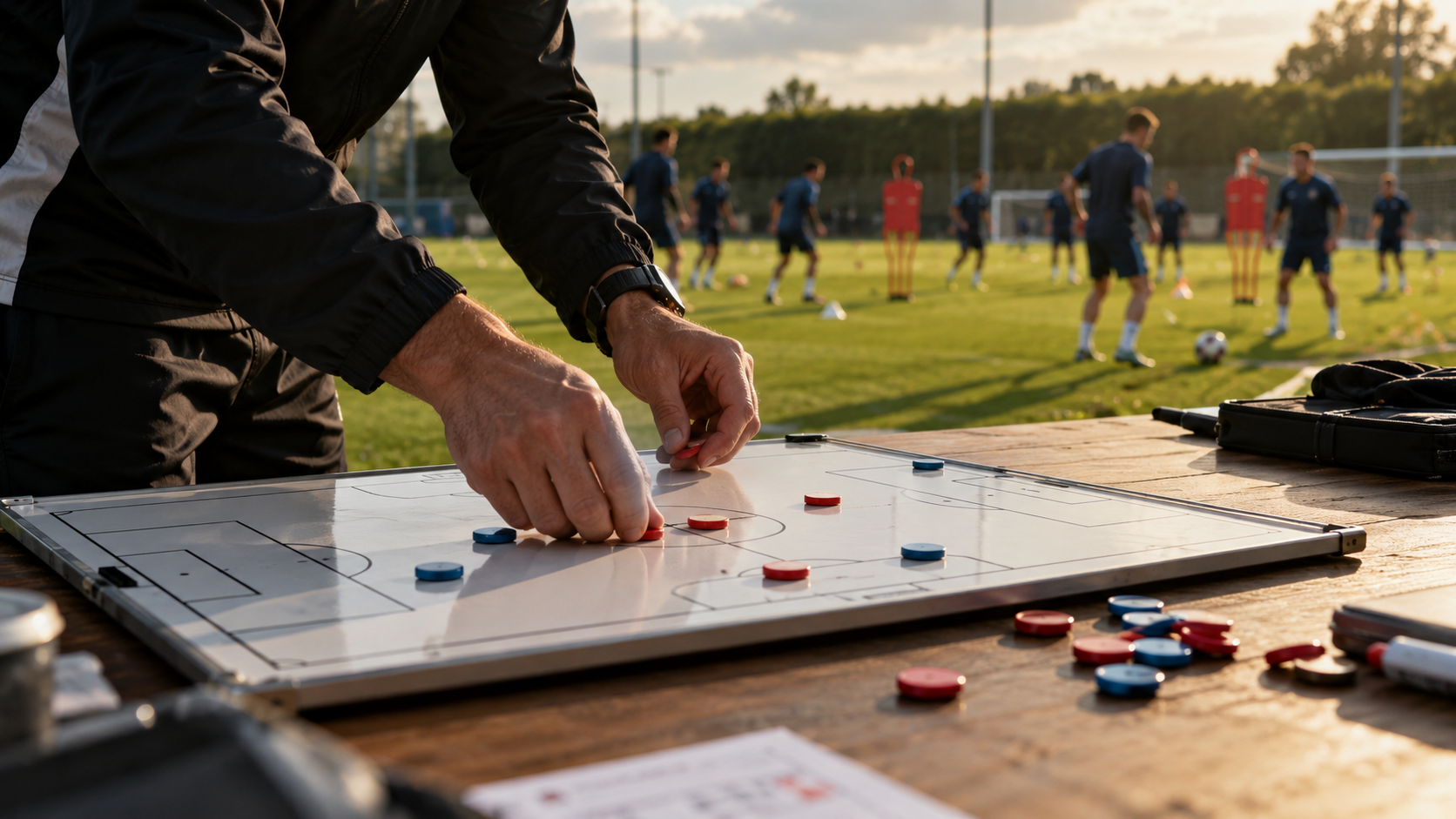
Version 2 of Your Company Is Not Version 1 + AI
3 Min Read
Version 2 of Your Company Is Not Version 1 + AI
AI’s real potential is not in automating today’s company. It is in redesigning the company around the outcomes, capabilities and operating model that AI now makes possible.
Most companies are using AI to make Version 1 faster.
Better research.
Faster proposals.
More personalized outreach.
Automated reporting.
Smarter CRM.
Less admin.
All valuable.
But automation is not reinvention.
The bigger question is:
If you were building this company today, with current AI capabilities available from day one, would you build it the same way?
That is the Version 2 question.
A true Version 2 changes at least one of three things:
The workflow. The capability. The business model.
The strongest opportunities change all three.
The simplest test
Version 1 + automation asks:
How can we do this faster?
Version 2 asks:
Why are we doing it this way in the first place?
Take sponsorship.
A football club traditionally has assets:
shirt rights, LED, hospitality, digital inventory, content, player access and events.
The commercial team packages them, finds buyers and closes deals.
That is Version 1.
Now add AI.
AI researches thousands of companies, identifies decision makers, monitors commercial signals, recommends brands, builds proposals, prepares meetings and tracks follow-up.
The team becomes dramatically more productive.
But the model has not changed.
The club still has inventory.
The commercial team still sells it.
The brand still buys sponsorship.
That is a powerful Version 1.5.
So what would Version 2 look like?
Start by deleting the word sponsorship.
Imagine a global consumer company says:
“We want to acquire 100,000 new customers aged 18 to 30 in the United States.”
Version 1 asks:
Which assets can we sell them?
Version 1.5 asks:
How can AI help us build a better package?
Version 2 asks:
What would we need to create to help achieve that business outcome?
Now the starting point is no longer inventory.
It is the customer objective.
That changes everything.
From sponsorship seller to growth platform
The club could build a solution combining:
fan audiences, players, creators, content, events, retail, data, e-commerce, media, hospitality and external partners.
And the final solution may include assets that do not yet exist.
Perhaps the best route to those 100,000 customers is a new US creator series around football culture.
So the club creates it.
The commercial product is no longer sitting on an inventory sheet waiting to be sold.
It is created around demand.
That is a different business.
From assets to outcomes
The distinction becomes simple:
Version 1 sells assets.
Version 1.5 uses AI to sell those assets more intelligently.
Version 2 sells commercial outcomes.
Customer acquisition.
Market entry.
Product adoption.
Retail growth.
B2B access.
Brand preference.
Loyalty.
Once the outcome becomes the product, pricing, delivery, measurement and even the organization can change.
The commercial team may need to become less about selling fixed rights packages and more about:
commercial intelligence, solution design, data, performance, creativity and senior relationships.
AI becomes the operating layer underneath that model.
The opportunity can create the asset
Historically, sports organizations monetized assets that already existed.
A shirt.
A stadium.
A match.
A player appearance.
A social channel.
Version 2 allows something different:
The opportunity can create the asset.
The system identifies the commercial need.
It understands the audience.
It proposes a solution.
It estimates value and cost.
It recommends distribution and pricing.
Then humans decide whether it should exist.
That is fundamentally different from selling existing inventory more efficiently.
The business model can change too.
If the club starts solving measurable commercial problems, pricing may also evolve.
Instead of only:
Fixed rights fee
you could see:
Base fee + performance + upside
The relationship moves from:
“Buy our rights.”
toward:
“Let’s create economic value together.”
And then there is Version 2+
Now imagine the system understands not only one club.
It understands:
clubs, leagues, athletes, creators, events, media and fan communities.
And on the other side, thousands of brands:
their audiences, markets, budgets, launches and growth objectives.
The brand no longer begins with:
“We want to sponsor Chelsea.”
It begins with:
“We need 100,000 Gen Z customers in the US.”
The system then builds the best sports solution around that objective.
Maybe Chelsea is part of it.
Maybe creators.
Maybe an event.
Maybe several properties.
At that point, sport starts behaving less like a collection of sponsorship assets and more like programmable commercial infrastructure.
The real Version 2 test
Ask:
If AI disappeared tomorrow, would the department still look almost exactly the same?
If yes, you probably automated Version 1.
A true Version 2 changes at least one of these:
Workflow: how the work happens.
Capability: what the organization can do that it could not do before.
Business model: what you sell, how value is created and how you get paid.
The strongest opportunities change all three.
The same logic applies elsewhere
Fan engagement
Version 1 sends campaigns to segments.
Version 1.5 personalizes them.
Version 2 asks whether campaign-based marketing should exist at all, or whether every fan should have an always-on relationship with the club.
Customer success
Version 1 runs account reviews.
Version 1.5 automates the reports.
Version 2 continuously monitors every account and surfaces risk or growth opportunities before anyone asks.
Sales.
Version 1 has prospecting, qualification, outreach and CRM.
Version 1.5 automates those activities.
Version 2 redesigns the function so commercial people spend their time where judgment, trust and relationships actually matter.
The pattern is the same.
Do not begin with the process. Begin with the outcome.
Final thoughts
Five questions for your next leadership meeting
1. What outcome is this function really supposed to create?
2. Which parts of the current model exist because of limitations that no longer apply?
3. What could we now do that was previously too expensive, too slow or impossible?
4. What should humans still own because judgment, trust and relationships matter?
5. If we started from zero today, what would we refuse to rebuild?
Start small, think radically
Pick one process.
First ask:
How would we automate Version 1?
Then throw that design away.
Ask:
How would we build Version 2 from zero?
The gap between those two answers is where the real opportunity sits.
Because the biggest risk is not that competitors automate faster.
It is that they redesign the model while you are still improving the old one.
Version 2 does not ask how to make the existing business faster.
It asks what the business should become.
AR
CEO, HYPE Sports Innovation
P.S.
On October 6th, I’m opening up the playbook on How to Turn Sports Brands Into Paying Customers. A practical playbook for building a lead engine and closing multiple deals with clubs, leagues and global sports brands. Join me here.


Comments