









Turning Any Smartphone Into an Athlete Performance Lab
3 Min Read
Turning Any Smartphone Into an Athlete Performance Lab
Onescrin gives clubs, academies, schools, coaches, physiotherapists and parents a more accessible way to assess movement, reduce injury risk and guide athlete development with data.
Industry problem framing
Athlete development is increasingly data driven, but access to quality performance testing is still uneven. Many clubs, academies and school programs know they need objective movement assessment, yet traditional lab equipment, wearable systems and specialist testing environments can be expensive, difficult to scale and hard to integrate into daily training.
That creates a gap between what elite teams can measure and what most athletes can actually access. Coaches need clearer visibility into movement quality, strengths, weaknesses, progress and potential injury risk. Athletes need feedback they can understand and act on. Parents want better insight into how development is being managed.
Onescrin addresses this gap by making biomechanical analysis available through a smartphone based platform. The company positions its solution as professional testing without the pro team budget, designed to help users analyze movement, improve performance and avoid injury.
Model shift and solution positioning
The model shift is simple: performance assessment is moving from specialist labs into the real training environment.
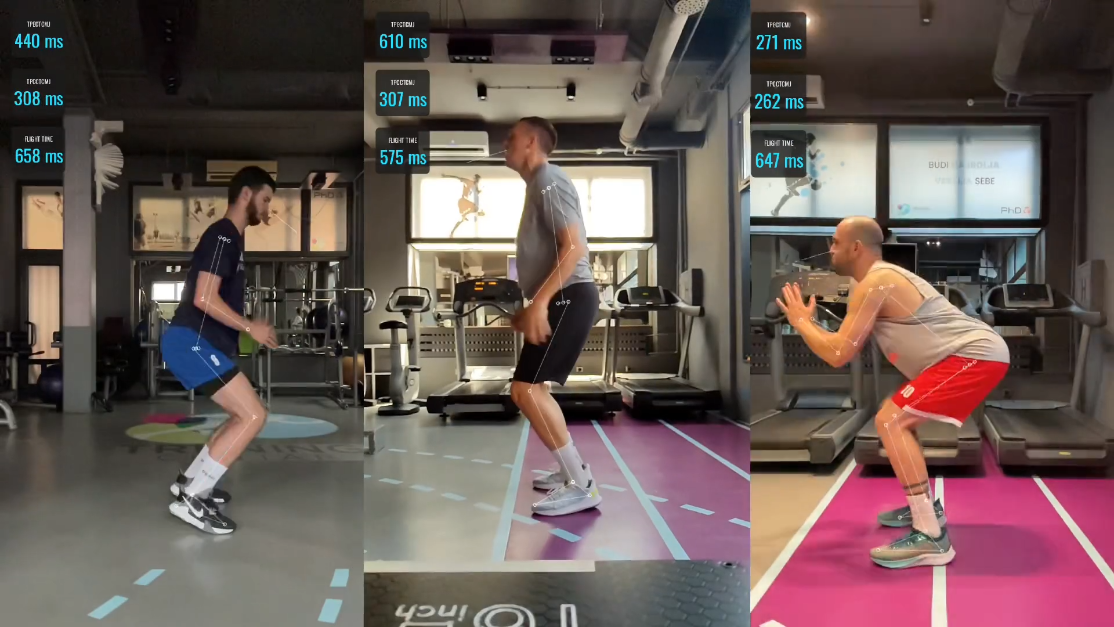
Onescrin turns any smartphone into a portable biomechanical lab. Instead of relying on expensive hardware or wearable trackers, the platform uses video from simple movement drills to generate science backed insights, injury risk detection and personalized training plans.
For the sports ecosystem, this matters because the most useful performance data is not always captured in isolated testing moments. It becomes more valuable when it can support regular coaching decisions, athlete conversations and development planning across teams, age groups and training settings.
Functional explanation
Onescrin works through a guided mobile testing flow.
Coaches or staff record athletes performing specific movement drills using a smartphone. The platform then analyzes the footage through its proprietary system and provides biomechanical analysis, key performance indicators, reports, benchmarks, injury risk flags and personalized training recommendations.
The test library includes jumps, sprints, flexibility and change of direction drills, which are used to identify injury risks and highlight performance strengths. Reports are presented in visual formats for coaches and parents, with action items and training plans designed to support progress over time.
Ecosystem relevance
Onescrin sits at the intersection of athlete performance, injury prevention, coaching operations and youth development.
For clubs and academies, it can support more consistent assessment across squads and age groups. For coaches, it creates a way to bring objective movement data into everyday training decisions. For physiotherapists, it can provide additional visibility into movement patterns and risk indicators. For parents, it offers clearer access to their child’s development through the coach or club environment.
The broader relevance is not only the technology itself. It is the operational accessibility. If a smartphone can become the entry point for performance screening, more teams can build a data informed development process without needing a full lab setup.
Credibility signals based only on provided inputs
Onescrin describes its AI engine as validated against lab grade systems, with the goal of providing measurements comparable to professional testing environments.
The company’s LinkedIn page describes Onescrin as an AI motion screening platform for athlete performance, built by former athletes and experts. It lists the company as privately held, based in Kfar Saba, Israel, with a company size of 11 to 50 employees.
Onescrin has also publicly shared club collaborations and platform adoption across several Israeli sports properties, including Bnei Yehuda, Hapoel Nir Ramat HaSharon FC, Hapoel Gezer, Ironi Ness Ziona, FC Maccabi Netanya and Maccabi Tel Aviv handball.
Who it is for within the ecosystem
Onescrin is built for sports clubs, academies, schools, physiotherapists, coaches, parents and athlete development environments that need objective performance insight without adding complex infrastructure.
Its practical fit is strongest where teams need to assess many athletes, monitor progress, identify weak points and create training plans in a way that can be repeated across a program.
Why it matters now
Modern athlete development is becoming more precise, more measurable and more accountable. Coaches are expected to make smarter decisions around readiness, performance, load and injury risk. Clubs are expected to show a clearer development pathway. Parents and athletes increasingly want transparency around progress.
The challenge is that many organizations still lack practical access to the tools that make this possible.
Onescrin matters because it lowers the barrier to biomechanical screening. It brings testing closer to the field, court, gym and training routine. That can help more organizations move from instinct only decision making toward a clearer blend of coaching experience and objective performance data.
For clubs, academies, schools and performance teams looking to make athlete assessment more accessible, Onescrin offers a practical way to bring biomechanical analysis into daily development workflows.
Learn more in: https://www.onescrin.com/



Comments