








The Robots Are Coming. What Happens to Your Sports Business?
3 Min Read
The Robots Are Coming. What Happens to Your Sports Business?
You may not have noticed it, but your next employee might not be human.
Robots have already served NHL fans, worked in an NBA arena kitchen and sorted hundreds of thousands of recyclable items at Gillette Stadium.
This isn’t science fiction. It’s already happening.
Robots have served NHL fans, worked in an NBA arena kitchen and sorted hundreds of thousands of recyclable items at Gillette Stadium. Recent reports document all three.
As you build your 2027 plan, these developments raise a question worth bringing to your next board meeting:
Which operating limits could your sports business begin to change?
The answer could affect how much you sell, how you serve fans and how you use your venue. By the end of this article, you will have a practical way to choose where to start.
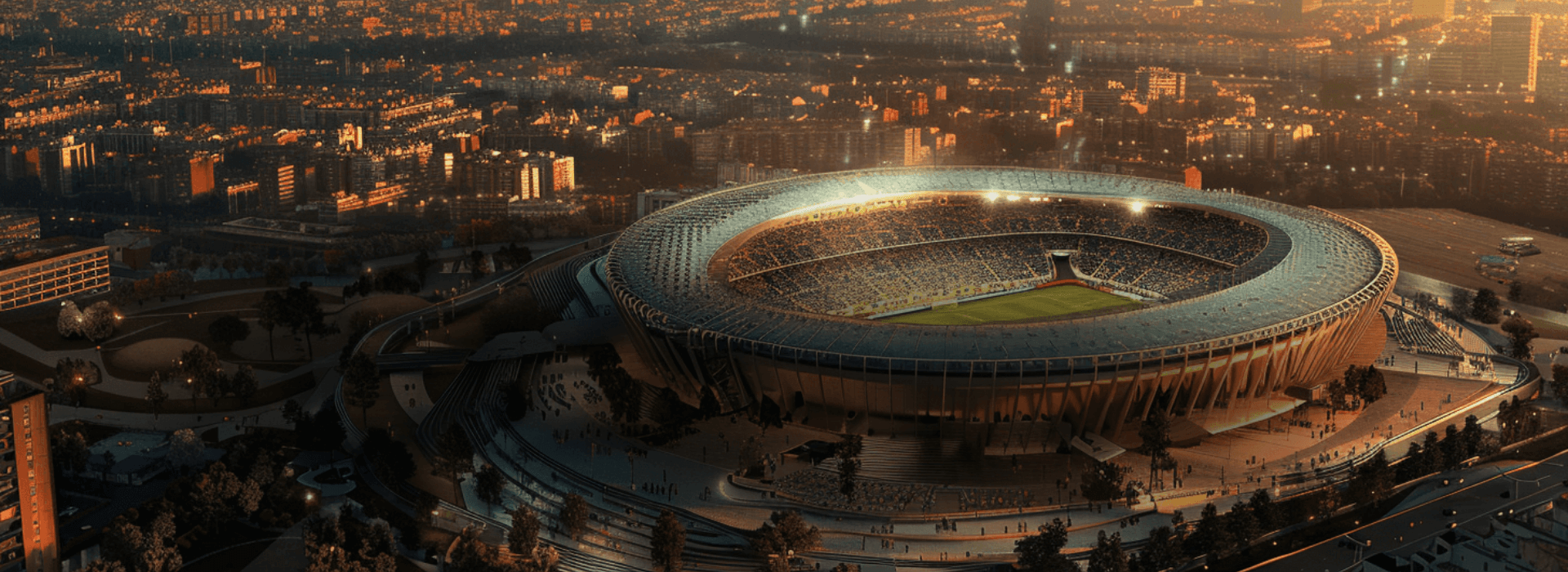
Picture half-time at your stadium.
Thousands of fans leave their seats. They want food. They want drinks. They have minutes to buy them.
The queue grows. Some give up. The whistle blows.
That purchasing window has closed.
Now picture the same building hours later. The crowd has gone. Your teams are cleaning floors, handling waste and preparing for whatever comes next.
Every stadium has two clocks: the match clock and the business clock.
The business clock measures the minutes you have to serve demand. The hours you need to reset the building. The time your people spend repeating physical tasks.
Robotics is beginning to change what can happen within those hours.
The developments reported over the past twelve months give leaders concrete places to look.
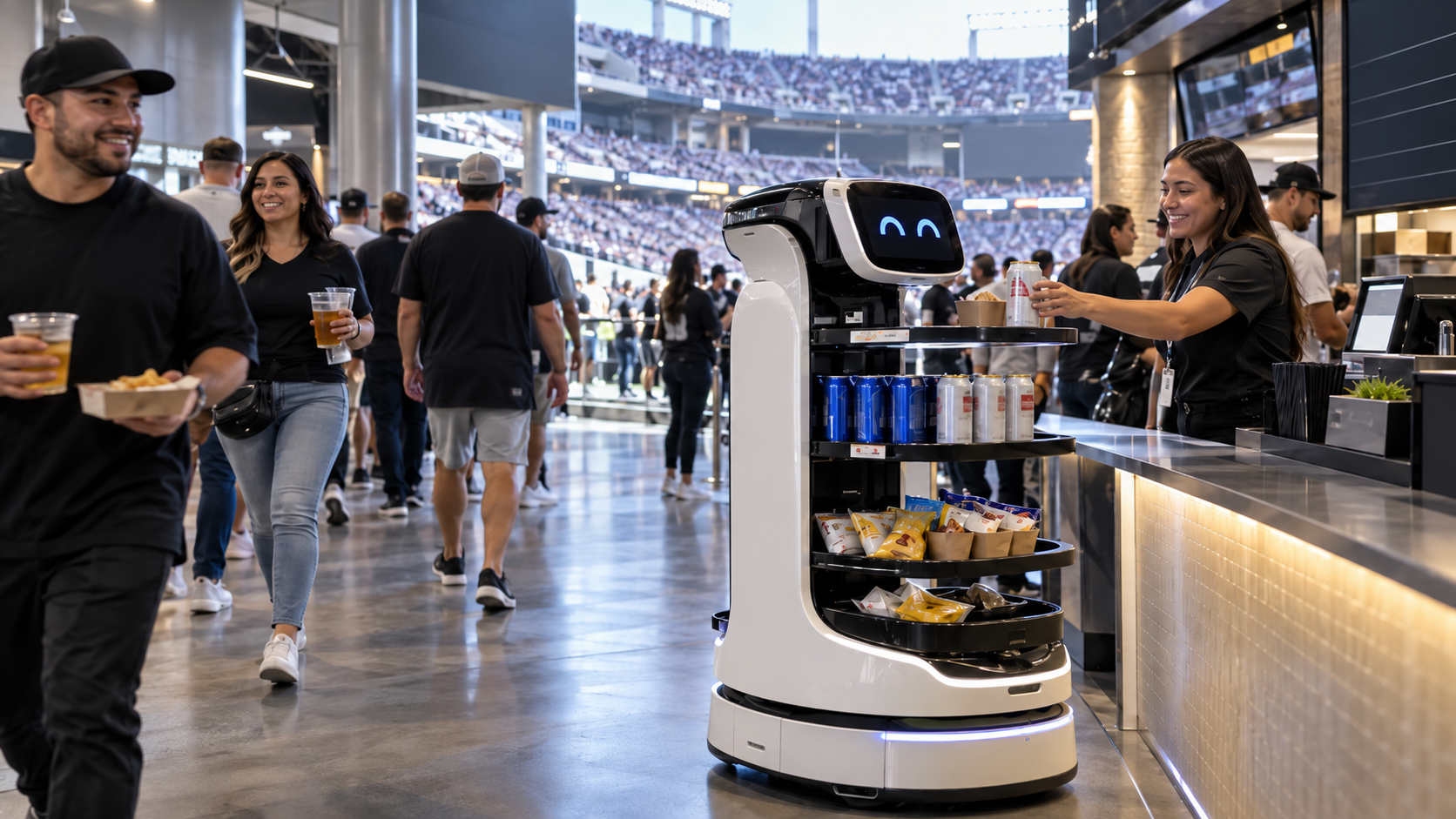
During the Vegas Golden Knights’ 2025–2026 season, Richtech Robotics’ ADAM served beverages and took part in partner activations at T-Mobile Arena. The team’s president of business operations confirmed the activities.
In April 2026, Miso Robotics reported that its Flippy robotic fry station was working games, concerts and events at its first NBA arena. The company has yet to name the venue or publish its commercial results.
At Gillette Stadium, rStream reported recovering 479,000 recyclable objects across seven recent full-stadium events in a July 2026 partnership announcement. Its automated system processes waste on-site, with a human operator monitoring the output.
In Dresden, an autonomous floor-cleaning robot entered permanent operation at Heinz-Steyer-Stadion in November 2025, according to a May 2026 EU project update.
These examples put robotics inside the working sports business: the bar, the kitchen, the floor and the waste stream.
For me, the important implication is that familiar operating limits deserve a fresh examination.
Your Busiest Fifteen Minutes
Start with your busiest fifteen minutes.
How many orders can your food and beverage operation complete? How many customers leave before buying? Where does the process slow down: preparation, payment or collection?
Consider a hypothetical example. If 500 fans abandon a £10 purchase, that represents £5,000 in potential sales during one event. Your own numbers may be very different.
A robot earns its place by improving the part of the process that constrains those sales. Faster frying helps when cooking is the bottleneck. A slow collection point still needs attention.
The operating result to measure is completed orders within the selling window.
After the Final Whistle
Now follow the business clock beyond the final whistle.
Gillette’s waste system uses cameras and sorting machinery to separate materials. It also creates a digital record of each event’s waste stream.
That gives an operator something useful to work with: evidence about what the building produces and what the system recovers.
Dresden’s cleaning robot follows mapped indoor routes. The questions for another venue are practical: how much staff time does it require, what standard does it achieve, and how reliably does it fit the event schedule?
Faster preparation could make a tight calendar easier to manage. Extra bookable capacity would depend on the building’s other constraints, from staffing to licensing and demand.
You need the whole operating picture to establish the value.
A New Conversation with Sponsors
There is also a commercial opportunity in the robot itself.
The Golden Knights used ADAM across beverage service and partner experiences. That combination opens an interesting conversation with sponsors: what useful, memorable experience could you build together?
Boston Dynamics offered another example at the 2026 World Cup. Its Atlas robot recreated football celebrations and delivered the ceremonial match ball during a World Cup half-time activation in July.
That was a staged activation. It illustrates a format that a sports property and technology partner can develop together. The commercial test would include sponsor interest, fan participation and repeatability.
Where Else Could It Matter?
Security teams have a separate set of questions. In June, Hyundai announced four Spot robots for World Cup patrol, monitoring and inspection at the Dallas International Broadcast Center and New York–New Jersey Stadium.
For your venue, the useful assessment is coverage, escalation and the workload required to support the system. Human responsibility belongs in that design from the beginning.
The opportunity map extends further. Ten places to examine are food preparation, beverage service, indoor cleaning, waste sorting, security patrols, equipment inspection, internal deliveries, merchandise logistics, robotic camera movement and sponsor experiences.
These are areas to investigate. The examples above establish specific activity; each additional application needs its own evidence and assessment.
For a commercial leader, that agenda is already substantial.
What Should You Do Tomorrow Morning?
Bring your commercial, operations and finance leads into one room. Include the person who actually runs the process you want to improve.
Choose one recurring physical task. Put a number against the problem.
• Sales: orders completed during peak demand and purchases abandoned.
• Operations: staff hours, preparation time and quality failures.
• Sponsorship: a specific experience, a prospective buyer and a way to measure participation.
Then ask a supplier for a relevant deployment reference. Speak to the operator. Ask what happens on a bad day, how often people intervene and what the system costs to keep working.
Check your contracts too. Your concessionaire or facilities provider may control the process and retain some of the financial benefit. Agree who pays, who operates and who gains before designing the trial.
Assign one owner. Set a bounded budget. Include integration, supervision, maintenance and downtime. Agree the result that would earn a wider rollout, and a date to make that decision.
Final Thoughts

Every stadium has two clocks. Your 2027 plan needs to account for both.
Robotics is entering the kitchen, the concourse and the work that continues after fans leave. Each deployment gives sports leaders another reason to examine what their own organisations could improve.
The operators learning today can enter next year with evidence about what works in their buildings. That knowledge can improve their next investment decision.
Start with one constraint. Measure it. Investigate a relevant solution. Give someone responsibility for finding the answer.
Your board already discusses revenue targets, service standards and operating costs. Robotics belongs in those conversations.
Before you approve your 2027 budget, ask your team: which constraint are we funding for another year without checking whether we can change it?
AR
CEO, HYPE Sports Innovation
P.S.
On October 6th, I’m opening up the playbook on The Mistakes That Kill Deals with Sports Brands. A practical playbook for building a lead engine and closing multiple deals with clubs, leagues and global sports brands. Join me here.


Comments
Robert
Robots in sports venues are fascinating because they can handle repetitive tasks while staff focus on guests and bigger operational needs. I saw a robotic food station at an arena once, and people were genuinely curious to watch it work. Later, while comparing fan experiences and service feedback, I browsed https://www.pissedconsumer.com/ to see how customers describe different companies. What interests me most is how sports businesses can use automation without losing the human side of events. Technology can make operations smoother, but atmosphere, conversation, and personal service are still a huge part of why fans enjoy being there in person.