




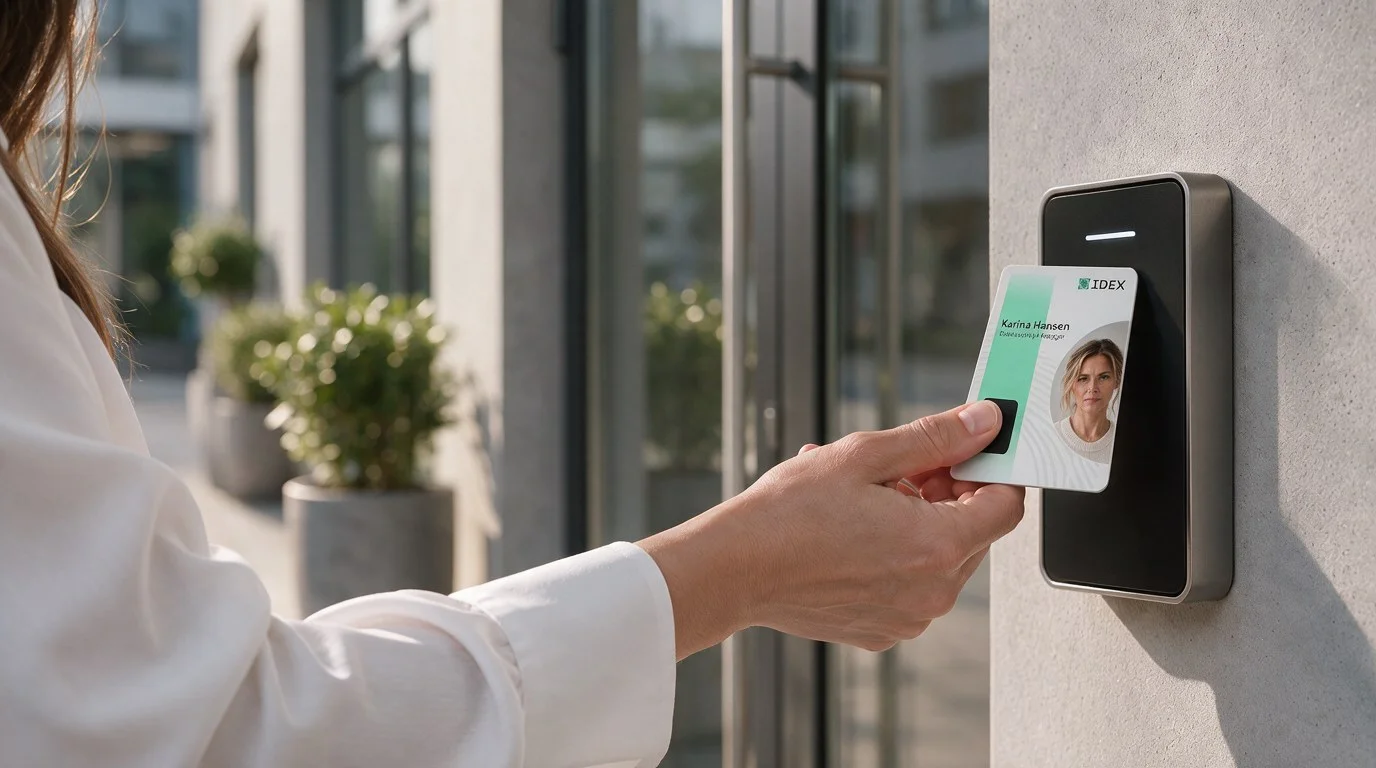
IDEX Biometrics Brings the Next Security Layer for Sports Access and Payments
5 Min Read
By building fingerprint authentication directly into the access card, IDEX Biometrics enables sports organizations to connect verified identity with physical access, digital authentication and payments through a single credential.
The gap between credentials and identity
Organizations rely on credentials to control access and authorize transactions.
Employees use cards to enter buildings. Users authenticate themselves to access digital systems. Customers use payment cards to complete transactions.
But a credential does not necessarily prove who is using it.
Cards can be lost, shared or stolen. Passwords and PINs can be compromised. As organizations manage more people across physical locations, digital environments and payment systems, the distinction between holding a credential and verifying an identity becomes increasingly important.
For sports organizations, this challenge is amplified by the complexity of the environment.
Clubs, leagues, federations and venues can manage employees, athletes, contractors, suppliers, media, partners and event personnel across facilities, restricted areas and digital systems.
IDEX Biometrics connects the credential directly to the individual, adding another security layer to the way organizations manage access and transactions.
From access credentials to identity infrastructure
IDEX Biometrics develops fingerprint authentication technology embedded directly into an access card.
The underlying shift is important.
Instead of a card simply granting access or enabling a transaction, biometric authentication allows the card to verify the identity of the person using it.
Fingerprint verification takes place directly on the card, with biometric data stored on the card, not in a central database as a cloud.
For access, this means a single credential can combine physical entry, digital authentication and identification.
For payments, fingerprint authentication can add another verification layer to both physical and online transactions.
The card remains familiar. What changes is the level of confidence behind the credential.
That positions biometric cards not simply as another security product, but as an identity layer connecting people with the environments and transactions they are authorized to access.
How the model works
One of the strengths of the IDEX model is that biometric authentication is designed to operate within existing card and identity infrastructure.
Its access technology supports physical access alongside authentication for laptops and cloud services, allowing organizations to connect different security environments through the same credential.
IDEX is compatible with established technologies and environments including MIFARE, HID, LEGIC, Microsoft Windows, Google and Okta.
The cards do not require batteries or charging. They receive the power required for authentication when interacting with a NFC reader.
Fingerprint matching takes place directly on the card, while built in liveness detection is designed to verify genuine human touch.
“The liveness detection and the overall security are unique, both in how they are implemented and in how well they work.”
Apps-connect. Active in logical access control solutions and a platinum HID partner.
The same principle extends into payments.
IDEX biometric payment technology enables fingerprint-authenticated card transactions and supports biometric authentication for online payments through 3D Secure.
Together, these capabilities create an infrastructure where identity can sit closer to the moment when access is granted or a transaction is authorized.
Why this matters across the sports ecosystem
Sports infrastructure is becoming increasingly connected across physical access, digital systems and commercial environments.
A professional club is not only managing a team. It can operate stadium infrastructure, training facilities, offices, hospitality spaces, commercial platforms, financial systems and cloud environments.
A venue may need to manage thousands of interactions across permanent employees, temporary staff, contractors, suppliers, media and partners.
The more connected these environments become, the more important identity becomes underneath them.
Biometric credentials create an additional security layer by connecting access more directly with verified individuals, without changing the familiar card-based experience.
For clubs, leagues and venue operators, that can be relevant across physical facilities, restricted environments and digital systems. In a stadium, that means knowing who actually enters player areas, media zones, hospitality and back of house.
For financial institutions, card issuers and commercial partners operating around sports, the opportunity extends into payments.
Sports already sits at the intersection of payments, loyalty, sponsorship and premium consumer experiences. Biometric payment cards introduce another layer where security and identity can become part of the product itself.
The broader opportunity is not limited to replacing an access card or adding fingerprint authentication to a payment.
It is about creating stronger connections between people, permissions and transactions while integrating with infrastructure organizations already use.
Who it is for
Within the sports ecosystem, IDEX Biometrics is particularly relevant for organizations managing complex combinations of people, permissions and infrastructure.
That includes clubs, leagues, federations, stadium and arena operators, training facilities and other sports organizations responsible for controlling access across physical and digital environments.
There is also a commercial opportunity for banks, card issuers, payment providers and sponsors looking at differentiated payment products and authentication experiences.
The common denominator is the need to know more than whether someone has the right credential.
It is the ability to verify the person behind it.
Why it matters now
Identity is becoming infrastructure.
Physical access, cybersecurity and payments have traditionally been treated as separate environments, but organizations increasingly need to manage them as part of the same security landscape.
At the same time, the number of people, systems and transactions that organizations need to authenticate continues to grow.
Partners across the access control chain see the same demand:
“Demand for secure access control and authentication is growing rapidly. As a leading global supplier of MIFARE DESFire chips, and an NXP MIFARE Premium Partner, we are well positioned to bring IDEX’s technology to our global partner network. Together, we can offer a more complete security solution, create greater value for our customers, and open new business opportunities.”
AdvanIDe, a leading global supplier of MIFARE DESFire chips and an NXP MIFARE Premium Partner.
For sports, this evolution is particularly relevant.
Clubs and venues are becoming more digital. Stadium operations are becoming more connected. Commercial ecosystems are expanding. More services and infrastructure depend on knowing who should have access, to what, and when.
IDEX Biometrics brings biometric verification directly into a familiar credential, creating a model where identity can travel with the individual across physical access, digital authentication and payments.
The bigger shift is from credentials that provide access to credentials that can verify the person requesting it.
As sports organizations continue to connect their physical, digital and commercial infrastructure, that distinction becomes increasingly valuable.
Learn more in: https://idexbiometrics.com/




Comments